ANJSO Brings Nanjing to the Picnic Table
Smoke rose from the grills before the formal welcome began. ANJSO Vice President Fang arrived early to help prepare the site and began grilling meat for participants. In the organizer-provided photograph, he is wearing a green shirt, black cap, and red apron beside the long barbecue pit. Other volunteers prepared skewers, shrimp, mushrooms, and trays of food nearby. But food was only one way into the afternoon’s community: the American Nanjing Society also arrived with questions, prizes, and an invitation to rediscover Nanjing together.[1][2][3]
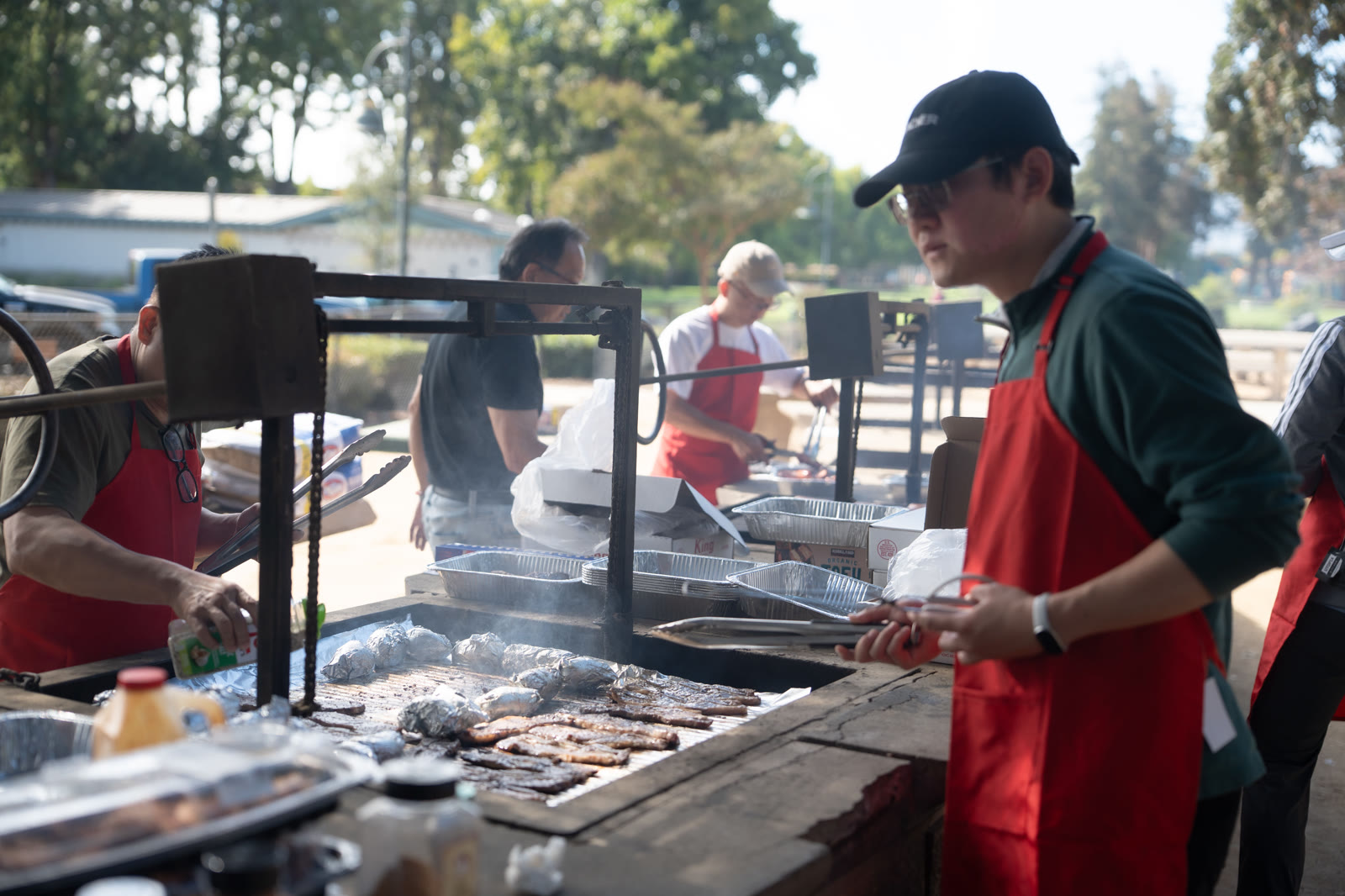
ANJSO Vice President Fang, in a green shirt, black cap, and red apron, grills meat after arriving early to help prepare for the gathering. Organizer-provided photograph.
The 2026 Jiangsu Universities Silicon Valley Alumni BBQ took place on Sunday, September 27, at the Group Picnic Area in Rengstorff Park, Mountain View. Alumni associations and community organizations with ties across Jiangsu jointly organized the gathering, with the American Nanjing Society among the co-organizers. The advertised program included barbecue, alumni networking, a lucky draw, and board games.[1]
A city in ten questions—and then a few more
ANJSO prepared ten Nanjing knowledge questions, plus three reserves. They moved across the city’s seasons, buildings, place names, folk arts, and intangible heritage: autumn red maples at Qixia Mountain; Chaotian Palace and the Ganxi Residence; the Jiangnan Examination Hall near the Confucius Temple; Jinling and Stone City; Nanjing brocade, the Qinhuai Lantern Festival, and Nanjing Baiju.[3]
The quiz was designed to work at more than one level. Some questions rewarded instant recognition: what do people traditionally go to Qixia Mountain to see in autumn? Others asked participants to retrieve a half-remembered layer of history: when did the name “Jinling” first appear, or which old names of Nanjing can you list? Nanjing’s official historical account traces Jinling to the state of Chu’s establishment of Jinling Yi around 333 BCE, near present-day Qingliang Mountain.[4] Official city cultural pages also identify Nanjing Baiju, Nanjing brocade, and the Qinhuai Lantern Festival as parts of the city’s living cultural inheritance.[5]
The three reserve questions were not enough. According to the organizing team, participants wanted to keep learning, so more questions were added on the spot.[3] That response changed the quiz from a short program segment into something closer to a collective memory game. Knowing an answer mattered, but so did hearing someone else explain a custom, recognize an old place name, or connect a landmark with a family memory.
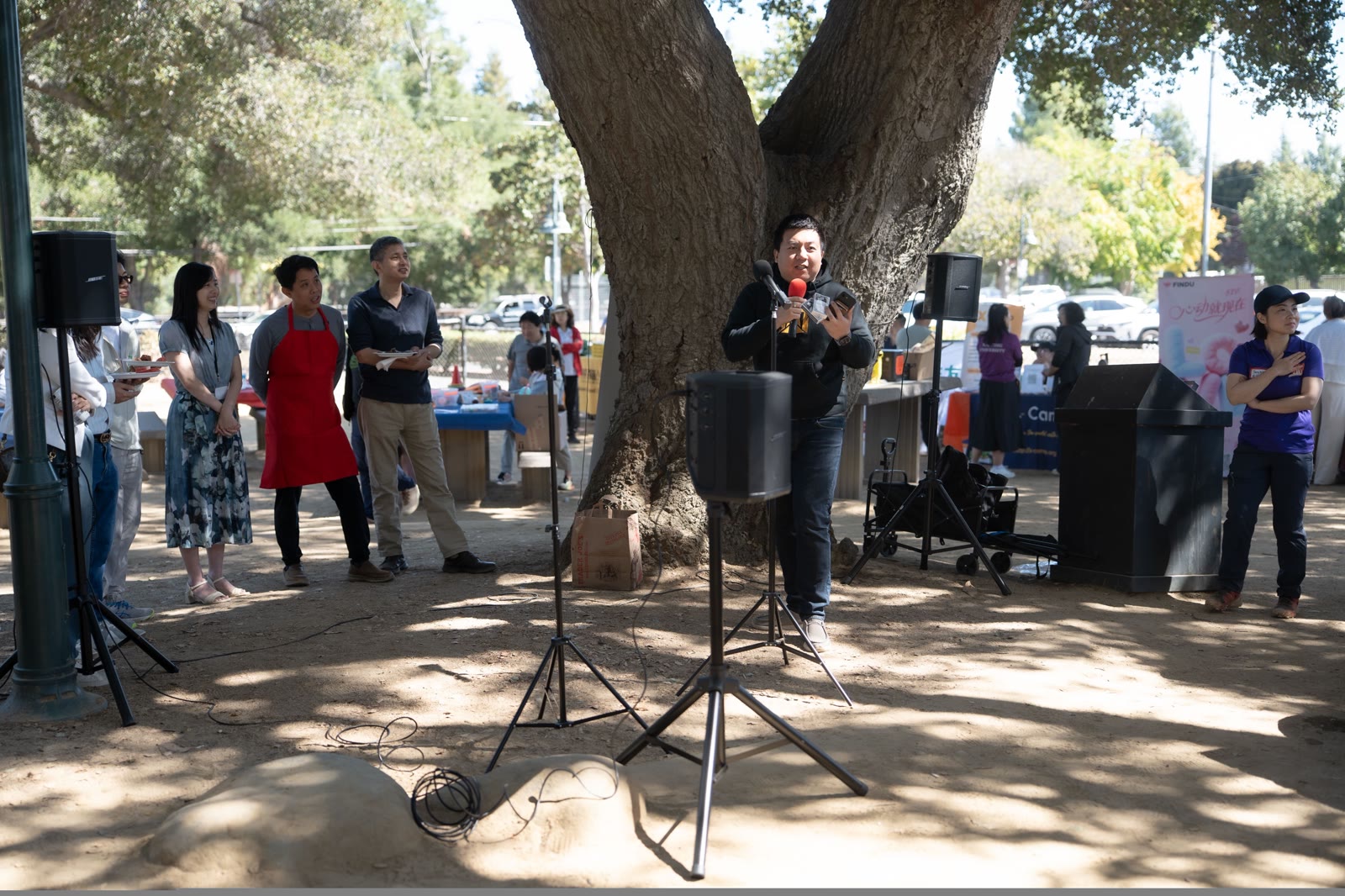
Participants take part in ANJSO’s Nanjing knowledge quiz. Organizer-provided photograph.
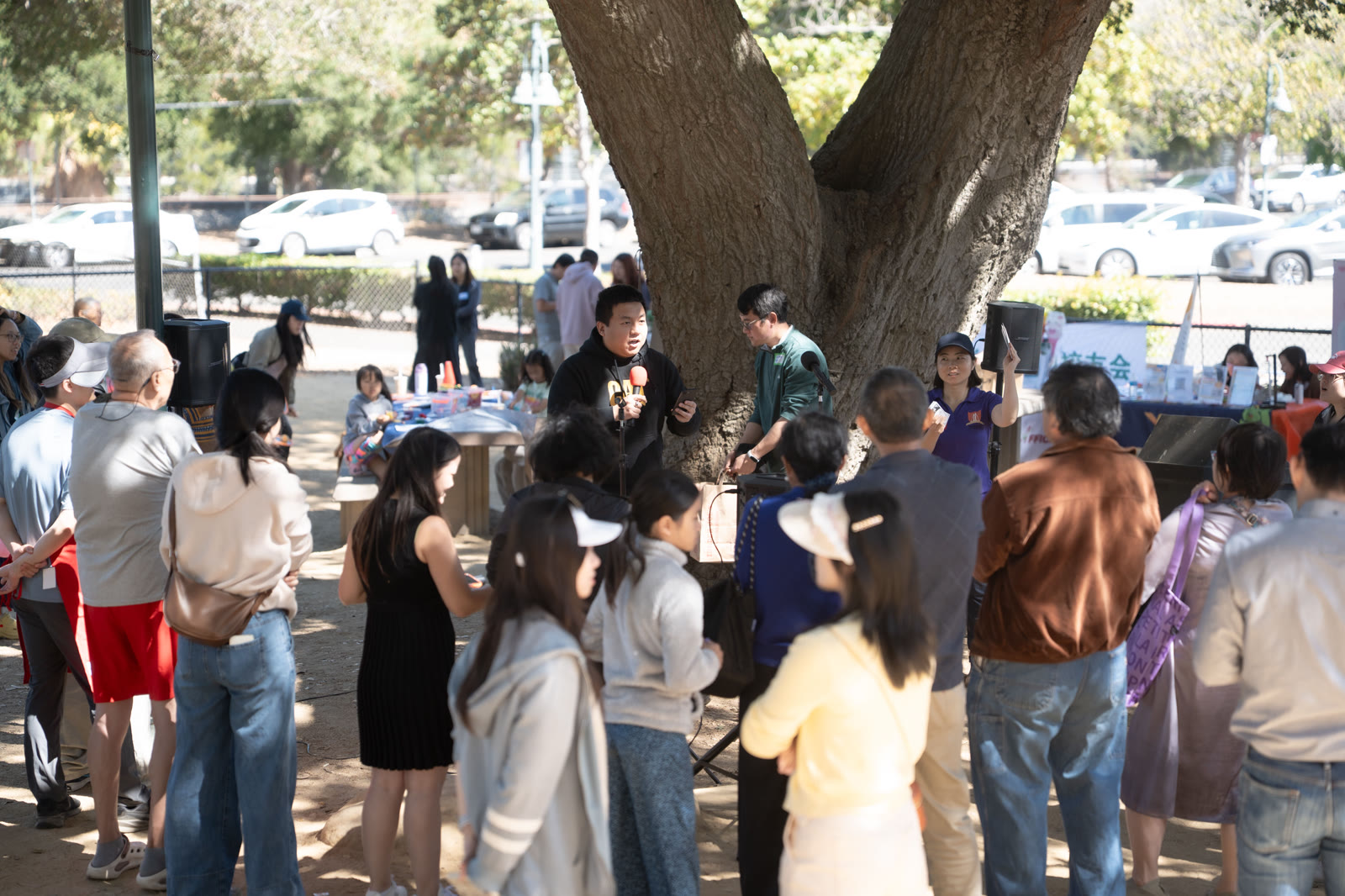
The Nanjing knowledge quiz continues as participants gather around the program area. Organizer-provided photograph.
A prize made of Nanjing
Winners received a custom American Nanjing Society–branded deck of cards created around the city. Its four groups of thirteen cards feature thirteen Nanjing snacks, thirteen landmarks, thirteen Nanjing expressions, and thirteen examples of Nanjing intangible cultural heritage.[3]
The prize extended the quiz beyond the microphone. A card could introduce a dish, send someone looking for a landmark, prompt a Nanjing phrase across the table, or open a conversation about a traditional craft. It also linked Nanjing culture with guandan, the card-game format chosen for the prize. Instead of treating culture as a list to memorize, the deck put it into an object meant to be handled, shuffled, played, and shared.
Food does the introductions; culture keeps the conversation going
The organizer-provided photographs show the work that made the afternoon possible: volunteers preparing food, tending the grill, serving participants, arranging equipment, and bringing people together around tables and microphones.[2] A joint gathering depends on that practical cooperation across organizational lines.
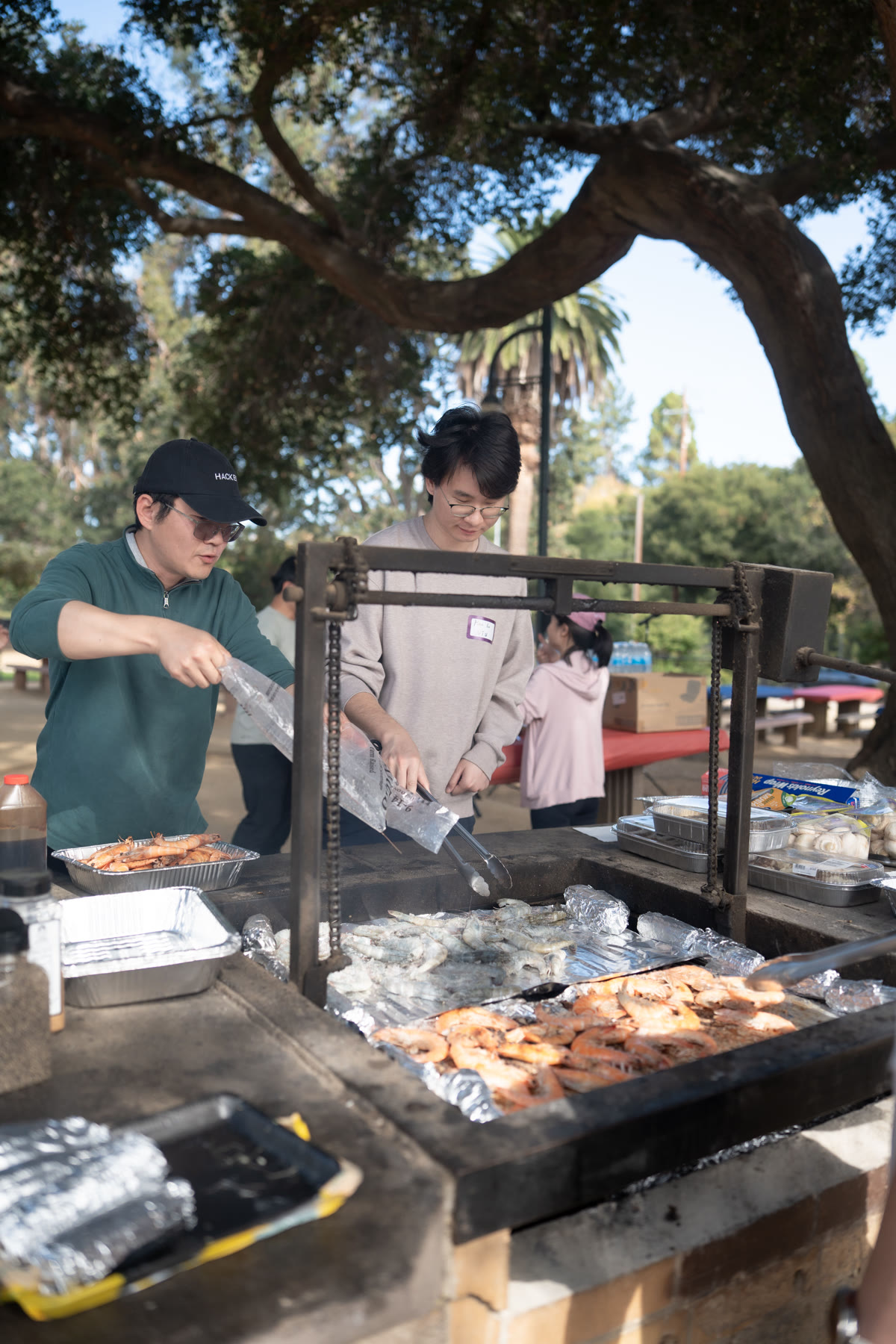
Food preparation was part of the volunteer work behind the gathering. Organizer-provided photograph.
The quiz added another kind of connection. Alumni could arrive through the identity of one university, then answer questions about a city shared across many campuses and many stages of life. Some knew the answer immediately; others learned it in Mountain View, thousands of miles from Nanjing. Both responses belonged in the same conversation.
No attendance total has been announced, and this report does not estimate one from the photographs. The images document an active picnic area, food service, public-address equipment, and participants gathered for the program.[2] The more revealing measure may be that ten questions, followed by three reserves, still did not satisfy the room’s curiosity.[3]
By the time the program gathered people near the microphones, the barbecue had already created a common table. ANJSO’s quiz gave that table a Nanjing vocabulary: red maples, old city names, traditional arts, neighborhood landmarks, and local speech. For an afternoon in Mountain View, Nanjing was not only the place remembered from afar. It became something people could ask about, answer, play with, and pass to the next person.
Sources
- Event organizer poster and organizer confirmation, “2026 Jiangsu Universities Silicon Valley Alumni BBQ,” supplied to the American Nanjing Society; supports the event name, date, advertised start time, venue, activities, and co-organizing role of ANJSO.
- Organizer-provided event photographs from Rengstorff Park, September 27, 2026; document food preparation, grilling, the picnic setting, public-address equipment, and participants gathered for the program.
- American Nanjing Society organizer notes, September 28, 2026; identify Vice President Fang and his early food-preparation work, and provide the ten-question quiz, three reserve questions, additional questions added during the event, and the design of the custom Nanjing-themed card prize.
- Nanjing Municipal Government, “Historical Evolution of Nanjing”.
- Nanjing official cultural references: “Spring Niushou” and “Autumn Qixia” red-maple tourism, Traditional Culture, four Nanjing projects in the first national intangible-cultural-heritage list, and Nanjing cultural-heritage practitioners.
Verified: Event identity, date, venue, advertised activities, ANJSO’s co-organizing role, Vice President Fang’s identification and early food-preparation work, quiz preparation and expansion, prize design, photographed scenes, the origin of “Jinling” used here, and the cultural-heritage examples linked to official city sources.
Reader note: Apart from Vice President Fang, this report does not identify participants or speakers. No attendance total, individual scores, or complete program sequence is claimed.
Image copyright status: All four photographs were supplied by the event organizer to the American Nanjing Society for this report and appear in the article. The cover is derived from one of these photographs. The QR-code event poster is retained only as an editorial source and is not displayed. No third-party stock image is used.
Author: Artificial Nanjinger
Disclosure: Drafted with AI assistance; factual review and publication require human editorial approval by the American Nanjing Society.
Sources
- http://tb.nanjing.gov.cn/njjj/lsyg/202108/t20210824_3110538.html
- http://www.nanjing.gov.cn/zdgk/201202/t20120229_1055628.html
- https://www.nanjing.gov.cn/zjnj/ctwh/202509/t20250919_5653080.html
- https://yht.nanjing.gov.cn/rednanjing/hsjy/hsrl/202504/t20250410_5121837.html
- https://wlj.nanjing.gov.cn/whyw/202509/t20250922_5653469.html
License: © American Nanjing Society